


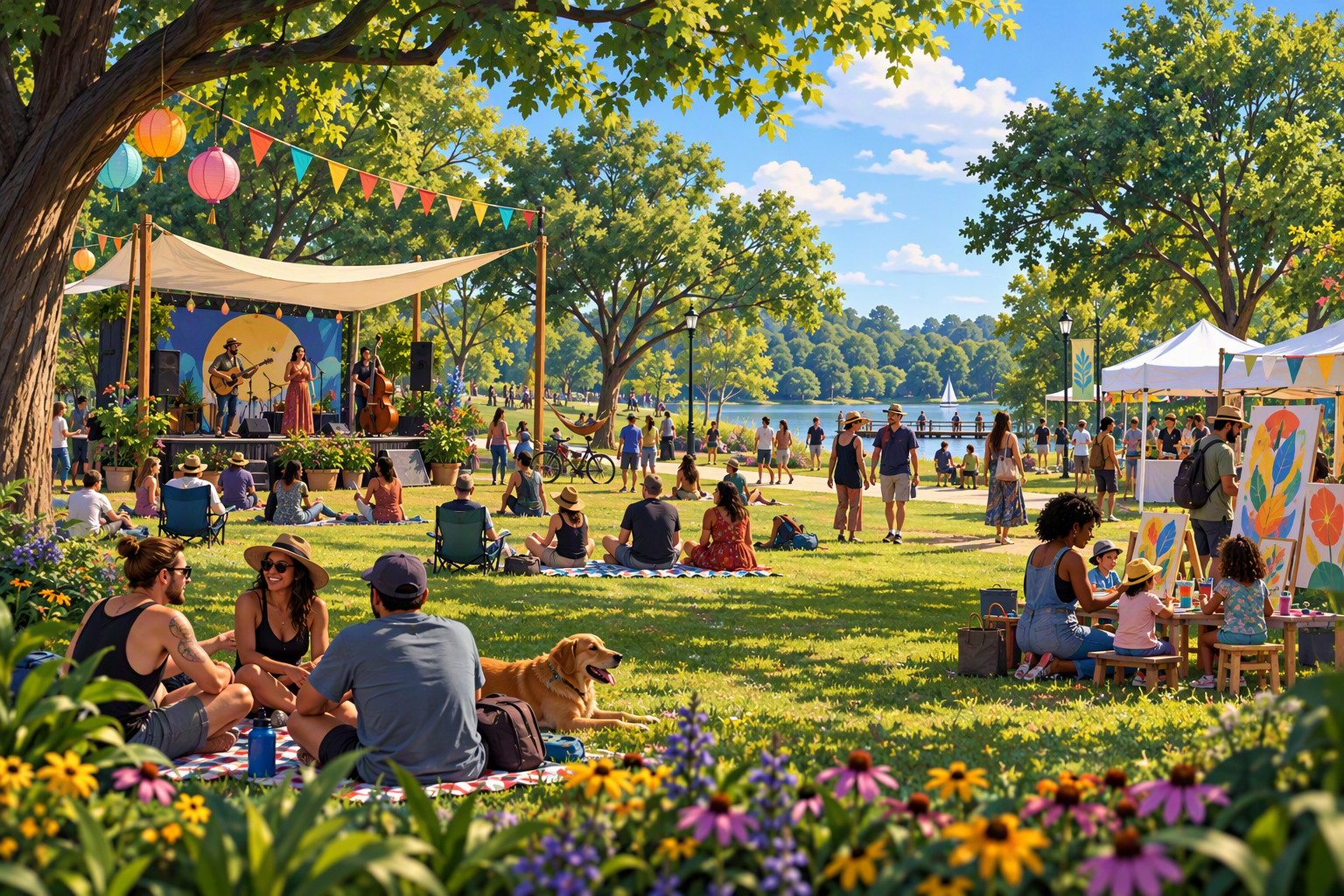
AI-generated image
A free event with a great lineup needs people to actually show up, and for a lot of local organizers, the marketing budget for that is basically zero. Higgsfield top notch feature is an AI Video Generator that helps small event organizers, artist markets, and neighborhood festivals promote what’s happening, without needing a huge production budget.
Why does promotion matter so much for a free, volunteer-run event?
A lot of the events that fill up a local events calendar — artist markets, neighborhood festivals, free concert series — run on genuinely tight budgets and volunteer effort year after year. The event itself might be well organized and genuinely fun to attend, but if the only promotion is a static flyer and a Facebook post, turnout depends almost entirely on people already knowing to look for it.
Free events specifically compete for attention against paid ones with real marketing budgets behind them. A festival that’s actually free to attend still has to convince someone it’s worth showing up for, and a short video showing the artist market, the food vendors, or last year’s crowd does that far better than a text listing ever could.
This gap tends to matter most for events that genuinely deserve a bigger turnout than they get. A well-run neighborhood festival with a solid vendor lineup and real community support can still draw a thinner crowd than it should, simply because the promotion available never quite conveyed what attending would actually feel like, the music, the food, the general atmosphere of a real Saturday afternoon in the park.
How does access to multiple AI video models help a small organizer?
This matters for events specifically because different kinds of promotional content need genuinely different treatment. A quick teaser clip for social media doesn’t need the same approach as a longer recap video meant to build hype for next year. Higgsfield gives organizers access to several leading video models, Seedance, Kling, Veo, Sora, and others, in one workspace, so a small events team can match the tool to what they’re actually making without learning several separate platforms.
For an event with the same vendors or performers returning year after year, character and scene consistency also matters quite a bit. A promo video that consistently represents the actual atmosphere, the same artist market, the same food trucks, the same general vibe, builds a recognizable identity for the event over multiple years rather than starting from scratch every season.
This kind of continuity genuinely helps recurring events specifically, the annual festivals, the weekly concert series, that depend on people recognizing and returning year after year without fail. A promotional approach that looks and feels consistent across seasons builds the same kind of familiarity a well-loved local tradition earns through repetition, rather than each year’s promotion feeling like an entirely new, unrelated event.
What’s the honest line for promoting an event with this kind of tool?
Use it to show what an event actually offers, real vendors, real activities, real hours, more compellingly than a static flyer can. Don’t use it to imply an attraction, performer, or amenity that isn’t actually part of the event. Local event listings live and die on genuine accuracy, and event details change more often than people actually expect, a headliner drops out, hours shift, a vendor cancels.
This is exactly the kind of thing local deals sites take seriously. A well-known local events guide’s own editorial note puts it plainly: they strive for accuracy, but things genuinely change without notice, and readers should verify details with the actual organizer before heading out. That same standard applies directly to any promotional video for the event, generated or not.
This distinction is worth building into how any small organizer actually uses this kind of tool right from the start. Generating a promotional clip from the real, current details of an event, this year’s actual vendor list, this year’s actual schedule, keeps the content honest by design. Reusing an old promotional video after details have genuinely changed, or generating a scene implying an attraction that was never actually confirmed, creates exactly the kind of mismatch between promotion and reality that leaves attendees disappointed and less likely to trust future promotion from the same organizer.
What happens when an event with real appeal has no marketing budget?
This is a genuinely common situation for the kind of events that fill up a local calendar. A neighborhood festival might have a real artist market, real food vendors, and a real music lineup worth attending, but without a marketing budget, that appeal often gets communicated through nothing more than a basic listing and a shared flyer image.
The cost of that gap is genuinely easy to underestimate. Two similar free festivals happening the same weekend will draw very different crowds if one has a short video showing the actual atmosphere and the other has only a text description, even when the underlying events are equally worth attending.
This dynamic plays out constantly on a busy local events calendar. A weekend might genuinely offer half a dozen worthwhile free events happening at the same exact time, and attendees making a choice between them are drawing on whatever information actually reached them, a compelling video that made an event feel worth the trip, or a plain listing they scrolled past without a second thought.
What are the traditional options for promoting an event?
Hiring a videographer for event coverage is one option, and it produces genuinely polished results if the event has the budget for it. Relying on phone photos and a shared flyer is the far more common reality for volunteer-run events, but it rarely conveys the actual atmosphere the way video genuinely can.
Both options carry real, genuine trade-offs worth naming directly. A hired videographer captures genuinely polished footage of the actual event as it truly happened, but the real cost per shoot means most volunteer-run festivals can only justify it for a flagship annual event, if that. Phone photos and a shared flyer cost absolutely nothing, but the real gap in conveying atmosphere means even a genuinely great event can look forgettable next to a similar listing that happens to include compelling video.
| Hiring a videographer | Phone photos and a flyer | AI Video Generator | |
| Cost | A real expense most small events can’t justify | Free | Included in a subscription |
| Turnaround | Requires scheduling in advance | Immediate | Minutes |
| Conveys real atmosphere | High | Low | High |
| Best suited for | A large, well-funded festival | Simple, low-stakes listings | Regular promotion for recurring events |
How does this fit into the small organizer’s promotion workflow?
An AI Video Generator, available through Higgsfield, lets an event organizer describe what’s actually happening, the artist market, the food trucks, last year’s crowd, and produce a promotional clip within minutes, without booking outside video production for every event on the calendar. For an organizer running the same festival annually or a recurring free concert series, that speed makes it realistic to actually refresh promotional content each season instead of reusing the same aging photo year after year.
This matters in a practical sense for anyone actually running one of these events. Most volunteer organizers are already juggling permits, vendor coordination, and logistics right up until the event itself, and promotional content is often the first thing that gets neglected simply because there’s no time left for it. A tool that produces something usable in minutes, rather than requiring a scheduled shoot weeks in advance, fits into that kind of compressed timeline in a way traditional video production genuinely doesn’t.
What must every video promoting an event be honest about?
This is the point that matters most for anyone promoting a public event. A promotional video has to represent what’s actually happening, real vendors, real hours, real free-or-paid status, never a version implying an attraction or amenity that isn’t genuinely part of the event. Use Higgsfield’s tools to show a real event more compellingly, never to promise something that isn’t actually there. Event details change, and a promotional video that doesn’t get updated alongside a schedule change becomes exactly the kind of inaccurate promotion that frustrates attendees who showed up expecting something specific, the exact scenario a good local events guide works hard to help readers avoid.
What can an event organizer build beyond a single promotional video?
One promotional clip is a starting point. The same approach can support promotion across an entire event season, and it connects to the kind of detailed, accuracy-focused event coverage already published in many local festival guides — listing the real vendor lineup, real performance schedule, and real parking details for an annual local festival that has run successfully for years. Higgsfield AI is a native AI creative suite, which offers advanced AI image, video, and voice generation, editing, and upscaling tools. The same workspace can also produce supporting graphics for the same event.
Does this replace the planning behind a good event?
No, and this matters as much here as anywhere. What actually makes an event worth attending is the real planning behind it, a genuinely good vendor lineup, a well-organized layout, volunteers who show up and make it run smoothly. A tool built into Higgsfield’s suite speeds up promoting that real event more effectively. It does not organize the event, book the vendors, or replace the actual planning work that determines whether attendees have a genuinely good time once they arrive on the actual day.
This distinction matters because promotion, however it’s produced, is fundamentally an execution layer sitting on top of real event planning. A genuinely disorganized event dressed up in polished promotional video will still leave attendees frustrated once they’re actually there, while a genuinely well-planned event benefits from compelling promotion regardless of whether that promotion came from a hired videographer or a generation tool.
What should a small event organizer look for in a tool like this?
Accurate representation of the actual event matters most, given how directly event promotion affects real attendee expectations. Fast turnaround matters, since most volunteer-run events are planned and promoted on genuinely tight timelines, often finalized only weeks before the actual event date. And ease of use matters, since most people organizing local events aren’t trained video editors.
What are the key takeaways for event organizers?
- Access to multiple video models in one workspace lets an organizer match the tool to the type of promotional content actually needed, a quick teaser versus a longer recap video meant to build hype for the following year.
- An AI Video Generator like Higgsfield helps volunteer-run events produce promotional video without a production budget most simply don’t have available.
- Every promotional video must represent the real event accurately, never implying an attraction or amenity that isn’t genuinely part of it.
- This kind of tool speeds up event promotion but doesn’t replace the actual planning and organizing that make an event worth attending in the first place.
Frequently Asked Questions
Can an AI Video Generator be used to promote an event feature that isn’t actually confirmed?
This should never be done. Promotional content should represent what’s genuinely confirmed and accurate, since event details change and inaccurate promotion leads directly to disappointed attendees who showed up expecting something that wasn’t actually there.
Does this replace the need to update listings when event details change?
No. A promotional video is only as accurate as the last time it was updated, and organizers still need to correct listings and promotional content whenever real event details actually change, whether that’s a new headliner, a shifted schedule, or a canceled vendor.
Do volunteer event organizers need video production experience to use this kind of tool?
No. Describing the event and what it actually offers is enough to produce a usable promotional clip without prior video production experience of any real kind.
Is this only useful for festivals, or does it help with other kinds of local events too?
It helps with other events too, since the same approach applies to markets, concert series, and any recurring free or low-cost community event that needs promotion on a limited budget and a tight timeline.



Leave a Reply