Deposit Photos
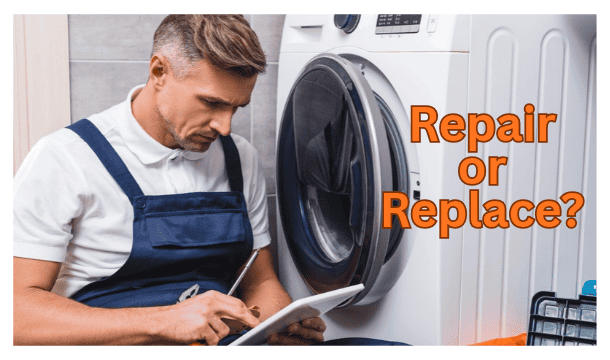
When your refrigerator stops cooling, your washer won’t drain, or your dryer takes two cycles to dry a load, you have an important decision to make: should you repair the appliance or replace it?
The answer depends on more than the repair bill. Consider the appliance’s age, repair history, parts availability, warranty coverage, and the cost of a comparable replacement. In Atlanta, your home’s ventilation, installation setup, and moisture conditions can also contribute to recurring appliance problems.
Before spending hundreds or thousands of dollars, determine the actual problem and compare your options.
At a glance
- Major appliance repairs in metro Atlanta may cost roughly $150 to $450, depending on the appliance, part, labor, and diagnostic fee.
- Mid-range replacement appliances typically cost about $500 to $2,500 or more before installation and other additional costs.
- The 50% rule is a useful starting point: if a repair costs less than half the price of a comparable replacement, repair may be worth considering.
- Age, repair history, parts availability, and warranty coverage can change the decision.
- Atlanta-specific issues such as dryer ventilation and appliance installation can sometimes contribute to performance problems.
What does it cost to replace an appliance in Atlanta?
Before deciding whether to repair an appliance, you need a realistic replacement price for comparison. Current 2026 pricing guides put many mid-range appliances in these general ranges:
- Refrigerator: $600 to $2,300
- Washing machine: $700 to $1,300
- Dryer: $600 to $1,200
- Dishwasher: $600 to $1,200
- Oven or range: $600 to $1,300
These are general equipment price ranges, not Atlanta-specific quotes. Brand, size, features, retailer, and availability can affect the price, while premium and built-in models can cost considerably more.
Remember to factor in delivery, installation, haul-away, electrical cords, plumbing changes, venting work, or cabinet modifications. For a fair comparison, compare your repair estimate with the total cost of a comparable replacement, not simply the appliance’s sticker price.
How much does appliance repair cost in Atlanta?
A typical single-component repair may cost around $150 to $450, including a diagnostic fee. The final price depends on the failed component, the appliance type, labor, and the part’s accessibility.
Common repairs include:
- Pumps
- Belts
- Heating elements
- Igniters
- Thermostats
- Drain components
If you’re considering appliance repair in Atlanta, getting a diagnosis can help determine whether you’re dealing with a relatively simple component failure or a more expensive problem.
A service such as Appliance EMT can help identify whether a refrigerator, dryer, washer, or other appliance has a repairable component failure. In some cases, replacing one component can cost substantially less than replacing the entire appliance.
Deposit Photos
The 50% Rule: Is your appliance worth repairing?
The 50% rule provides a quick starting point for comparing repair and replacement.
If the repair costs less than half the price of a comparable new appliance, repairing the existing unit is often worth considering, particularly when the appliance is relatively young and has been reliable.
For example, if a comparable refrigerator costs $1,500 and the repair estimate is $300, the repair represents only 20% of the replacement price.
But don’t treat 50% as an automatic yes-or-no test. A $400 repair may make sense for a newer appliance but not for an older unit that has already required several repairs. Parts availability and operating costs can also affect the decision.
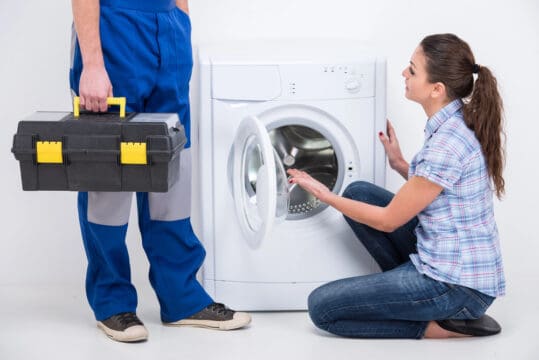
Alt text: A technician repairs a relatively new washing machine while a homeowner observes in a bright, modern Atlanta laundry room.
When repair makes sense
Repair is generally worth investigating when:
- The appliance is relatively young.
- The problem appears to involve one failed component.
- The repair estimate is well below the cost of a comparable replacement.
- The appliance has otherwise been reliable.
- Replacing it would involve significant delivery or installation costs.
A single repair does not necessarily mean an appliance is nearing the end of its useful life.
When replacement may be the better choice
Replacement deserves more consideration when:
- The appliance is more than 10 to 12 years old and has recurring problems.
- It has needed multiple repairs within the past year.
- A necessary part has been discontinued or is difficult to obtain.
- The repair estimate is close to or greater than half the replacement cost.
- An older appliance uses significantly more electricity than a newer comparable model.
Instead of asking only, “How much will this repair cost?” consider how much you are likely to spend keeping the appliance running.
Consider the appliance, not just the repair bill
Before approving a repair, consider four things: the appliance’s age, repair history, current repair cost, and replacement cost.
A relatively new appliance with its first major problem may be worth repairing. If you’ve already paid for several repairs, review the total recent costs and consider whether another service call is likely.
Parts availability matters, too. A low repair estimate is less useful if the technician must wait weeks for a discontinued or hard-to-find component.
Also check the manufacturer’s warranty and any extended coverage before paying out of pocket. Depending on the terms, the appliance or failed component may still be covered.
Appliance issues to watch out for
Your home’s setup can sometimes contribute to appliance problems, particularly in older properties.
Check the dryer vent
If your dryer works but takes two cycles to dry a normal load, don’t automatically assume the heating element has failed. A long, restricted, or dirty vent can reduce airflow, increase drying time, and contribute to overheating.
If the problem keeps returning, have the ventilation system checked rather than repeatedly repairing the appliance.
Look at the installation
Older Atlanta homes may have laundry areas that were added or relocated during renovations. A modified layout can result in a longer dryer vent run, while tightly fitted appliances may have limited airflow.
Atlanta’s hot, humid summers can also increase the workload on some appliances.
Check for moisture
Recurring moisture or drainage problems may not originate inside the appliance. If a dishwasher or washing machine repeatedly develops problems, inspect the surrounding installation area, plumbing, and other nearby areas for moisture issues.
Once you’ve dealt with the appliance problem, you can explore more of the city as fall gets underway. See this guide to things to do in Atlanta in September for current events, festivals, and outdoor activities.
A simple repair-or-replace checklist
Before spending money, ask these questions.
How old is the appliance?
A relatively young, reliable appliance is usually worth diagnosing. Older appliances with repeated failures require a closer look at total costs.
What actually failed?
Don’t make the decision based only on the symptom. A dryer that won’t heat, for example, could have a component problem or an airflow issue.
What is the repair estimate?
Get a diagnosis and a written or clearly explained estimate when possible.
How does the repair compare with replacement?
Compare the repair with a similar appliance in capacity, features, installation requirements, and expected use.
How many times has it been repaired?
One repair is different from several repairs within a short period.
Is the part available?
Ask how quickly the necessary component can be obtained and how long the repair should take.
Is there warranty coverage?
Check your coverage before paying out of pocket.
Common mistakes to avoid
Avoid replacing an appliance before getting a diagnosis. A broken appliance may only need an inexpensive component.
Don’t ignore the cause of a recurring problem, either. For example, repeatedly repairing a dryer without checking a restricted vent could leave the underlying issue unresolved.
You should also compare a repair with a comparable replacement rather than the cheapest appliance available. Remember to ask about diagnostic fees and parts availability before scheduling service.
FAQs on repairing vs. replacing appliances in Atlanta
How do you know if an appliance is worth repairing?
Start with its age, repair history, and current repair estimate. A relatively young, reliable appliance whose repair costs substantially less than replacement is often worth repairing.
What does appliance repair cost in metro Atlanta?
A typical single-component repair may cost around $150 to $450, including a diagnostic fee. Complicated repairs, premium appliances, and built-in units can cost more.
Should you repair an appliance that is still under warranty?
Check the warranty before paying for service. Depending on the terms, the manufacturer or retailer may cover some or all of the cost of the repair.
Can Atlanta’s climate affect appliance problems?
Atlanta’s heat and humidity can contribute to conditions that affect appliance performance. Older homes may also have ventilation, drainage, or installation issues worth checking.
Is it worth replacing an appliance if the repair is inexpensive?
Sometimes. If the appliance is old, has required several recent repairs, or is expensive to operate, replacement may make more sense even when the latest repair is relatively inexpensive.
The best solution
Don’t decide whether to repair or replace an appliance based on the repair price alone.
Start by checking the warranty and considering the appliance’s age and repair history. Then get a diagnosis and compare the repair estimate with the full cost of a comparable replacement.
A newer appliance with one isolated problem may be worth repairing. An older appliance with repeated failures, unavailable parts, or rising operating costs may be a better candidate for replacement.
In Atlanta, also consider the installation itself. Dryer ventilation, appliance clearance, and moisture around the surrounding area can sometimes contribute to problems that look like appliance failures.
The goal isn’t simply to choose between repair and replacement. It’s to spend your money on the solution most likely to keep the appliance working reliably.