


Deposit Photos
A box of photographs left in an Atlanta attic through even one humid summer can warp, stick together, or fade beyond repair. Add a stack of VHS tape recordings of birthdays and school plays, and the damage multiplies fast.
Preserving family keepsakes on a budget doesn’t require a professional archivist or a big spending spree. It just takes knowing which projects matter most and which low-cost resources already exist nearby. The goal might be protecting decades-old photo albums, or just making sure a toddler’s crayon drawings outlast the refrigerator door. Either way, a few simple habits go a long way.
Preserving family keepsakes is worth the effort
Family keepsakes need attention now because most of the damage that ruins them happens slowly and quietly. Heat and humidity warp photo paper. VHS tape degrades a little more every year it sits unwatched, and paper documents yellow and grow brittle in attics and garages. None of this requires a disaster — an ordinary Georgia summer does plenty of damage on its own. Waiting until a keepsake is already damaged limits the options. Catching problems early, and cheaply, keeps far more of a family’s keepsakes intact for the next generation.
Start by organizing your memories
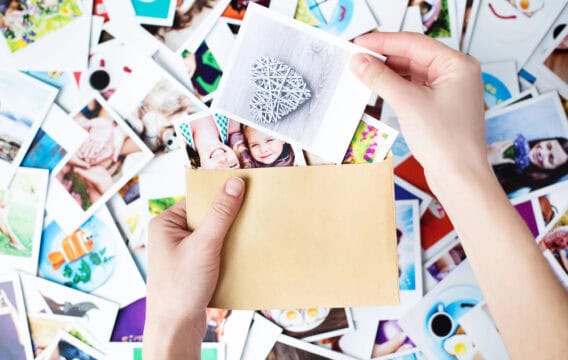
The best place to start is by gathering everything in one place before deciding what to do with it.
Pull out photo boxes, old tapes, baby books, and loose documents from closets and attics, then sort them by type and age.
Then, consider storing the sorted items more appropriately.
You don’t have to spend a lot on binders, plastic sleeves, large bins, etc. to more effectively organize your collection.
Digitize photos, VHS tapes, and home movies on a budget
Digitizing is the single most effective way to protect keepsakes that exist in only one physical copy. A digital file, unlike a photo or tape, can be backed up in multiple places at once. It’s the bet way to keep photos forever, backed up on hard drives or in the cloud.
A scanner app on a mobile device works fine for flat photos in good condition.
VHS tapes, film reels, and fragile or damaged prints usually need equipment most households don’t own, though. For those formats, a mail-in digitization service like Capture can handle the transfer to digital files.
Affordable ways to capture new family keepsakes
Not every keepsake needs to be decades old to be worth preserving; creating new ones affordably is just as valuable.
Local photo experiences built around holidays and seasonal events are a good example. The free photos with Santa opportunities that pop up each winter don’t cost you a dime. Yet the pics become instant keepsakes, without a professional photographer’s price tag.
Recording a grandparent telling a favorite story is another free option — just use your mobile phone to capture the memory.
Saving a photo of a child’s artwork, instead of the physical piece, is another way to add to the collection without adding to the clutter.
Store photos and documents safely
Storage matters as much as digitizing when it comes to preserving what’s already fragile. Not every keepsake should, or can, be converted to a digital file.
Follow basic archival storage guidelines
The safest home storage setup is simple: cool, dry, and out of direct light. The National Archives’ guidelines for preserving family papers and photographs recommend keeping items below 75 degrees Fahrenheit, away from damp basements and hot attics. Items should also be stored flat in acid-free boxes rather than stacked loosely. None of these materials are expensive. Acid-free folders and boxes are sold at most craft and office supply stores for just a few dollars. Avoiding regular tape, rubber bands, and glue near photographs prevents damage that can’t be undone later.
Find affordable bins and organizers
Good storage containers don’t require a full remodel of the hall closet. Watch for the seasonal discounts on storage and closet organizing that pop up throughout the year. Retailers like the Container Store mark down shelving, bins, and closet systems several times annually. A single labeled bin per decade, or per family member, keeps the collection browseable instead of buried. Clear bins also make it easy to spot water damage or pests before they spread to everything else.
Back up all digital files
A digital file is not automatically safe just because it’s not on paper. The Library of Congress’s guidance on archiving personal photos recommends keeping at least two copies in physically separate locations. One copy might sit on a computer, with another on a cloud service or external drive. That way a single hard drive failure or house fire can’t wipe out everything at once.
Refreshing storage media every five years or so also matters, since old CDs, thumb drives, and hard drives can quietly fail without warning. A cheap external hard drive is often the best money spent in this entire keepsake-preservation project. Keep one copy on a computer and another on a cloud service or external drive.
Keep the memories, not just the boxes
Sorting and organizing your memories doesn’t have to all happen in one weekend, and it doesn’t have to be expensive.Preserving family keepsakes on a budget is really a series of small, low-cost habits. Sort a box at a time, digitize the riskiest items first, and store the rest properly so Georgia humidity doesn’t finish the job. Start with whichever box feels most urgent, whether that’s a stack of fading photos or a shelf of aging home videos. Treat it as the first project, not the whole to-do list.



Leave a Reply